Product Inquiry
Please leave your details and product requirements.

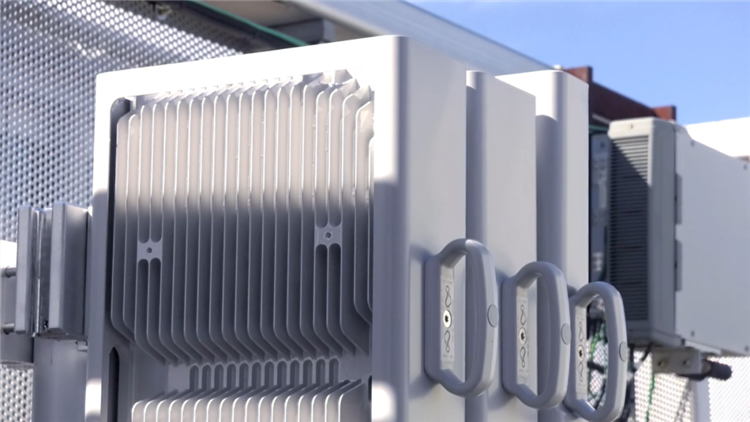
On June 3, Nokia announced in Espoo, Finland, that its 5G AirScale liquid cooled base station solution has helped Finnish mobile operator Elisa reduce the potential energy bill of its base stations by 30% and reduce CO2 emissions by approximately 80%. This is the world’s first deployment of a commercial 5G liquid cooled base station solution, demonstrating Nokia’s strong commitment to sustainability and combating climate change.
While reducing energy and emissions, Nokia says the liquid-cooled base stations operate quietly and are maintenance-free. In addition, compared with standard active air conditioning equipment, the volume is reduced by up to 50% and the weight is reduced by 30%. Liquid cooling technology saves a lot of operating costs for base station operators and extends the service life of base station components as much as possible.
It is reported that Nokia announced the successful deployment of the world’s first 5G liquid cooled base station system on its official website on December 10, 2018. At MWC 2017, Nokia demonstrated Bell LABS ‘liquid-cooled base station technology. With the continuous evolution of wireless technology from 2G to 5G, the power consumption of the base station is 2-3 times that of the 4G era, and the energy efficiency of the traditional air cooling system is too low compared with the liquid cooling system because the heat capacity of air is about 4000 times smaller than that of water. Therefore, 5G base stations require more advanced liquid cooling systems.
Liquid cooling heat dissipation
Liquid cooling heat dissipation is a kind of cooling technology suitable for high power electronic equipment, using the large specific heat capacity characteristics of liquid cooling medium to quickly take away the heat of the equipment.
At present, the application and development focus include single-phase liquid cooling, two-phase liquid cooling, submerged liquid cooling, spray liquid cooling and so on. The first two kinds of liquid cooling technology, the cooling medium does not directly contact the electronic device, the latter two kinds of liquid cooling technology use dielectric liquid, direct contact with the electronic device, the best cooling effect.
Single-phase liquid-cooled coolant is driven by a pump and flows in the channel to take away heat, the most common application is water-cooled plate, which is a more mature technology. The cost of water-cooled plate is mainly concentrated in materials, flow molding and welding.
The topological design of water-cooled plate runner and the integrated process of simple runner groove sealing and welding are the two leading directions that we know at present.
The flow path topology design, as explained by the Toyota researchers, aims to combine jet shock in the cooling plate with runoff based on an optimized post-branch cooling channel, ultimately removing most of the heat evenly with minimal pressure drop, without the need to install a large pump to increase the flow of coolant, resulting in energy waste.